
 By

FUEL’s Second Convocation Ceremony Held; FUEL SkillTech University, Pune, Formally Announced
Pune, October 24, 2026: The purpose of education should not be limited to securing a good job, earning a high salary package or achieving financial prosperity. Knowledge acquired through education must also be used to contribute to social development and help the underprivileged. While becoming self-reliant, students must develop a sense of responsibility towards others, said Tamil Nadu Governor Rajendra Arlekar.
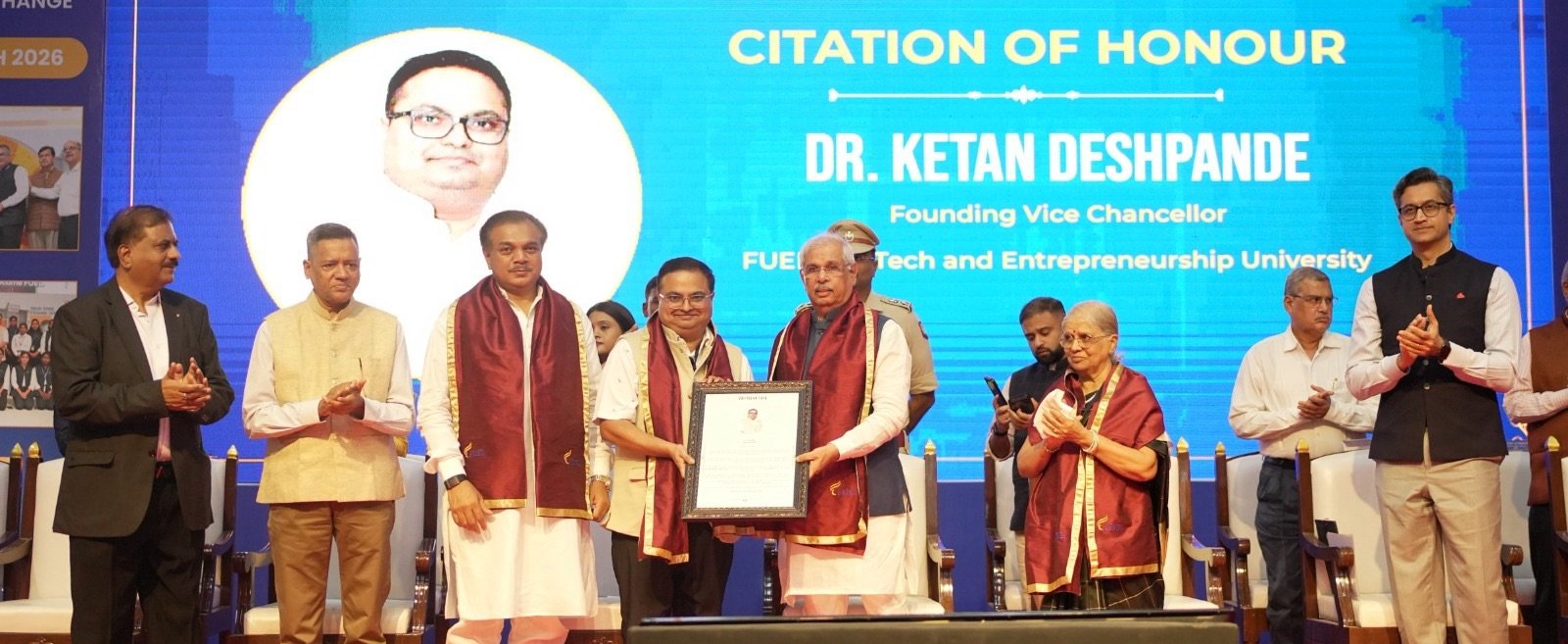
He was speaking at the 20th Foundation Day celebrations and the second convocation ceremony of Friends Union for Energising Lives (FUEL). During the ceremony, degrees were awarded to students from the Management Batch of 2024–26, along with students enrolled in various CSR-supported certificate programmes. The occasion also marked the formal announcement of the launch of FUEL SkillTech University, Pune.
The event was attended by Dr. Sulabha Deshpande, Chancellor of FUEL SkillTech and Entrepreneurship University; Ketan Deshpande, Chairman and Vice-Chancellor of FUEL; Ganesh Mohan, Managing Director of Bajaj Finserv Asset Management Limited; Pratyush Mehrotra, Chairman and Chief Operating Officer of SBI Foundation; MLA Rana Jagjit Singh Patil; Prof. Mayuri Deshpande; and Shashi Kiran Shetty, Chairman of the Allcargo Group.
Arlekar observed that students were receiving degrees, diplomas and various certificates, but the real question was how they would apply their qualifications in practical life and contribute towards resolving societal challenges. Rather than merely listening to speeches, students must translate the ideas they learn into action, he said.
Reflecting on his own educational experiences, Arlekar questioned whether securing a place on the merit list, earning good marks, achieving financial prosperity, owning a bungalow and driving expensive cars could alone be considered the true measure of educational success. He emphasised that education must place equal importance on shaping individuals into responsible and compassionate human beings.
Describing the FUEL model as a distinctive approach to education, he said it brings together academic learning, practical skill development, industry collaboration and entrepreneurship. FUEL’s efforts to prepare young people for the professional world serve as an encouraging example for other educational institutions. States across the country should consider adopting similar models in accordance with their local needs, he added.
Ketan Deshpande said FUEL had completed 20 years of its journey, consistently focusing on providing young people with skill-based education and employment opportunities. The guidance of former President Dr. A.P.J. Abdul Kalam had helped give the institution’s work a clear direction.
He stated that 80 per cent of students from the 2022–26 batch had secured employment opportunities and that their salaries had reached twice their families’ annual incomes. With the support of industry partners, FUEL plans to expand educational opportunities in fields such as data science and finance. Industry-linked learning remains one of the institution’s key distinguishing features, he said.
Ganesh Mohan said technological advancements do not necessarily eliminate jobs; instead, they accelerate work processes and create new employment opportunities. As technology evolves, manufacturing methods and the nature of industries also change. He urged students to choose work that benefits others, develop leadership qualities before assuming positions of authority, and preserve human relationships in the technology-driven era.
Shashi Kiran Shetty expressed his interest in entering into a memorandum of understanding with FUEL to establish a School of Logistics, strengthen collaboration between industry and educational institutions, and create more opportunities for young people.

Comments are closed.