
 By
By ELTAI international conference from October 7 to 10; AI, NEP 2020 and evolving teaching methods to be discussed
PUNE: With artificial intelligence (AI) rapidly transforming the education sector, educators and scholars from India and abroad will deliberate on the future of English language and literature education at a four-day international conference in Pune. The 20th International and 56th Annual Conference of the English Language Teachers’ Association of India (ELTAI) will be held from October 7 to 10, 2026, jointly organised by ELTAI and MIT Art, Design and Technology (MIT-ADT) University, Loni Kalbhor, Pune.
Hosted by the School of Humanities and the School of Holistic Development of MIT-ADT University, the conference is expected to bring together around 1,000 English teachers and delegates from across India, along with more than 50 international scholars from countries including Nepal, Bangladesh, Iraq, Uzbekistan, Malaysia and Thailand.
The conference, themed “English on the Edge: Survive? Evolve? Thrive?”, will focus on the changing landscape of English education and the challenges and opportunities emerging from technological and pedagogical transformation.
The conference will be inaugurated in the presence of Maharashtra Higher and Technical Education Minister Chandrakant Patil, British Council Deputy Director Shannon West, Cambridge University South Asia Director T. K. Arunachalam, Vice-Chancellor of the English and Foreign Languages University, Hyderabad, Prof. Dr N. Nagaraju, MIT-ADT University Executive President Prof. Dr Mangesh Karad and Vice-Chancellor Prof. Dr Rajesh S.
Union Minister of State for Cooperation and Civil Aviation Murlidhar Mohol is scheduled to attend the valedictory ceremony.
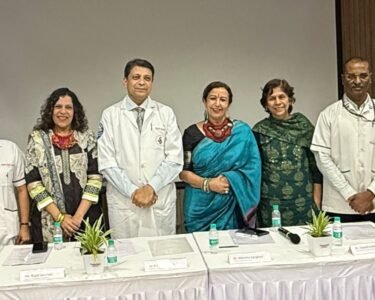
Giving details at a press conference, MIT-ADT University Provost Prof. Dr Sayali Gankar said generative AI is bringing rapid changes to writing, translation, reading, assessment and teaching practices. At the same time, changes in higher education curricula, multilingual classrooms, increasing use of technology and evolving expectations from teachers have created new challenges for English education.
The conference will deliberate on how English education can adapt to emerging technologies while preserving the importance of human creativity, critical thinking and communication skills, she said.
MIT-ADT University Registrar Dr Mahesh Chopade said bringing scholars from across the world onto a common platform would help strengthen the link between educational policy and classroom practice. “This discussion is significant for both the Indian and global education systems,” he said.
Dr Atul Patil, Director, School of Holistic Development, and Dean, School of Humanities, said the conference would address a fundamental question: “When AI can read, write, translate and even imitate teaching, what remains uniquely human in English education?” Empowering teachers to adapt to changing circumstances, embrace new ideas and provide leadership would be a key objective of the conference, he said.
The conference will feature research presentations, interactive workshops, seminars, panel discussions and expert sessions. Researchers and teachers will also have opportunities to publish their work in journals and publications, including Peter Lang publications and journals such as the Journal of English Language Teaching (JELT) and the Journal of Teaching and Research in English Literature (JTREL), ELTAI National Vice-President Dr Kishore Selva Babu said.
‘Read Fest’ to promote reading culture
A special ‘Read Fest’, or reading festival, will also be organised alongside the conference to encourage young people to reconnect with books and reading. The festival will be inaugurated by social worker and Padma Shri awardee Girish Prabhune.
The initiative aims to cultivate reading habits among students, strengthen their connection with books and promote reading culture. Stalls featuring newspapers, publishers and student initiatives will be set


Comments are closed.